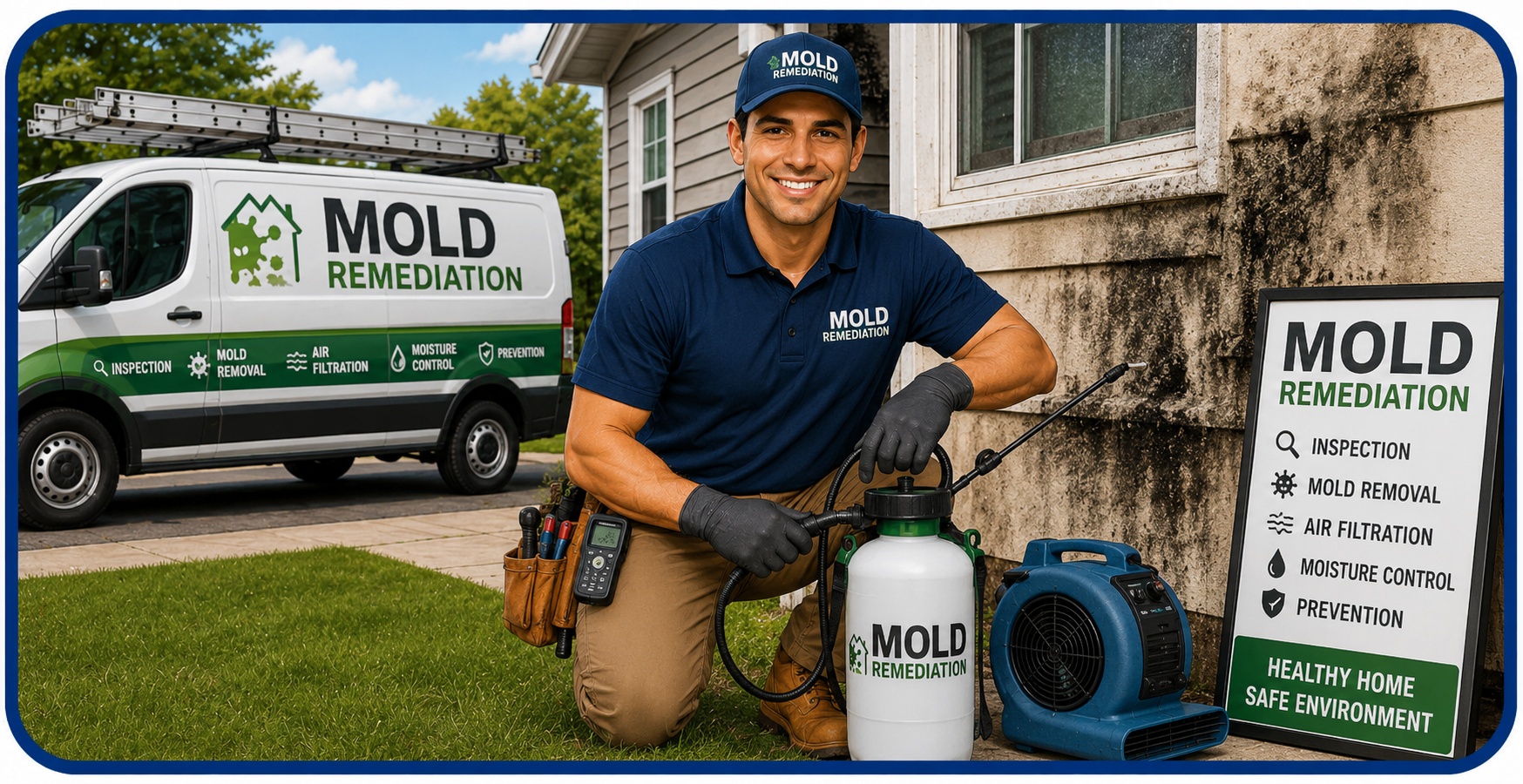
Bathroom mold visible on grout lines and caulk seams in your Englishtown home is typically a symptom of a deeper problem. When tile grout absorbs moisture and underlying caulk fails, water penetrates to the substrate and wall cavity behind — where mold colonies develop entirely out of sight. 247 Mold Remediation removes both the visible and the hidden contamination, and addresses the moisture pathway that allowed it to develop.
📞 Call +1-844-692-0486 — Available 24/7Most bathroom mold in Englishtown extends behind the tile surface to the substrate and wall cavity. Our technicians use moisture meters to assess the wall assembly beyond what is visible, so the full extent of contamination is found and addressed — not just what shows on the surface.
Bathroom remediation in an occupied Englishtown home requires containment to prevent spore migration to adjacent rooms. We establish containment before any demolition and run HEPA air filtration throughout the project — protecting the rest of your home while the work is done.
We do not pull tile speculatively. Our Englishtown assessment uses moisture meters, probe testing, and visual documentation to determine the extent of contamination before any removal, so the demolition scope is based on actual findings — not guess work.
Every Englishtown bathroom remediation includes assessment of the exhaust fan capacity and function — because an undersized or non-functional exhaust fan is the root cause of most bathroom mold problems and will cause recurrence if not addressed after remediation.
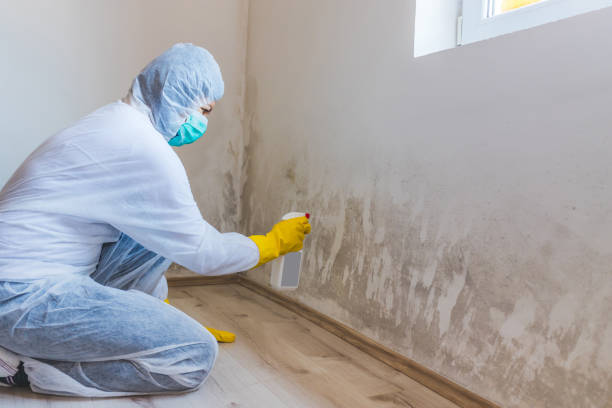
Bathrooms are the highest-humidity spaces in any Englishtown home, and the tile-and-grout assemblies that make them functional are also the primary vectors through which moisture reaches the structural framing of the wet wall. Standard ceramic tile is not itself porous, but the cement-based grout that fills the joints between tiles absolutely is. In a properly functioning tiled surround, the caulk joints at horizontal transitions — where the tile meets the tub deck, the tile meets the floor, and at inside corners — provide a waterproof seal that prevents water from traveling behind the tile plane. When those caulk joints crack, gap, or deteriorate, water from every shower enters the assembly.
Once water is behind the tile in a Englishtown bathroom, it contacts the cement backer board or greenboard drywall substrate, and the paper facing and organic compound binders in both materials are readily colonized by Cladosporium, Penicillium, Aspergillus, and in persistent cases Stachybotrys chartarum. The wood framing studs and plates at the base of the wet wall are the next surface water reaches, and once framing lumber reaches elevated moisture content, it supports active colonization quickly. The critical point is that none of this progression is visible from inside the bathroom until the contamination is extensive enough to produce visible staining or soft floor surfaces — meaning that by the time a Englishtown homeowner can see the problem, the behind-tile contamination is often already substantial.
Our approach to Bathroom Mold Removal in Englishtown properties is to determine the actual extent of contamination before any material is removed. We use calibrated moisture meters against the wall surface to measure moisture content through the wall assembly and identify where elevated moisture begins and ends in the tile surround area. This determines whether the contamination is isolated to one wall section, extends to adjacent walls, involves the subfloor at the base of the shower, or has migrated to the ceiling. That assessment drives a demolition scope that removes exactly what needs to come out — not more, not less.
Remediation of the exposed framing and any structural surfaces found behind the tile uses HEPA vacuuming to remove loose spore material followed by EPA-registered antimicrobial treatment of all affected wood surfaces. The work area is contained from the rest of your Englishtown home throughout this process with polyethylene barriers and negative pressure HEPA air filtration running continuously. Post-remediation air sampling confirms that spore levels have returned to acceptable limits before the space is ready for reconstruction — and the written clearance certificate provides the documentation your contractor, insurance carrier, or real estate party will require.
Moisture meter assessment of the wall assembly in your Englishtown bathroom to determine the extent of contamination behind tile before any material is removed — so demolition is based on findings, not assumptions.
Controlled removal of contaminated tile, backer board, drywall, and caulk in your Englishtown bathroom shower surround, followed by EPA-registered treatment of all affected framing and structural surfaces behind the wet wall.
Assessment and remediation of mold on bathroom ceilings in Englishtown homes, typically resulting from inadequate exhaust ventilation — including moisture testing, safe removal of contaminated drywall, and structural surface treatment.
Evaluation of bathroom exhaust fan capacity, function, and termination point in your Englishtown home to determine whether the fan is adequately sized and properly vented to the exterior — a critical step in preventing mold recurrence after remediation.
Air sampling after Englishtown bathroom remediation is complete, with written clearance certificate confirming spore levels are within acceptable limits — required before reconstruction begins and for insurance and real estate documentation.
Complete written documentation for insurance claims related to bathroom mold in Englishtown: moisture assessment, remediation scope, photographic record, and clearance certificate formatted for acceptance by major carriers in NJ.
Assessment, containment, remediation, and clearance — every step documented.
We moisture-test the wall assembly, floor, and ceiling of your Englishtown bathroom to determine the actual extent of behind-tile contamination before any tile or drywall is removed — preventing unnecessary demolition and ensuring nothing is missed.
The bathroom is sealed from adjacent living spaces and negative pressure HEPA air filtration is established before any demolition begins — preventing spore migration to the rest of your Englishtown home during the project.
Contaminated tile, backer board, drywall, and framing materials are removed and disposed of safely. Exposed structural framing is HEPA vacuumed and treated with EPA-registered antimicrobial. Exhaust assessment is completed and documented.
Post-remediation air sampling confirms clearance and the written certificate and documentation package are delivered — giving your reconstruction contractor a clean, verified start and giving you the documentation your insurance or real estate party requires.
"We had persistent dark grout staining in our master bath that kept coming back no matter how many times we cleaned it. 247 Mold Remediation came in, moisture-tested the wall, and found the reading behind the tile was way above normal — failed caulk joint had been letting water in for a couple of years. They found mold on the framing studs behind the surround. Thorough, clean work, and the clearance test came back clear."
"Our kids' bathroom had a mold spot on the ceiling that kept growing back every couple of months. Turned out the exhaust fan had been disconnected from the duct at some point and was just exhausting into the wall cavity. 247 Mold Remediation found the mold behind the drywall, remediated the whole affected area, and made sure we understood what was needed on the exhaust side before they left. Problem solved."
"Bought a Englishtown home that had a slow leak behind the hall bath that the previous owners clearly knew about and covered up with fresh caulk. The home inspector flagged it. 247 Mold Remediation did a thorough moisture assessment before pulling anything, scoped exactly what needed to come out, remediated it, and gave us a clearance certificate. Our insurance covered most of the cost based on their documentation."
Surface mold visible on bathroom grout lines is most commonly Cladosporium or Penicillium species, which colonize porous materials in high-humidity environments. While surface bathroom mold is a nuisance and an air quality concern, the more significant question is whether the contamination extends behind the tile to the substrate and framing — where Stachybotrys and other species with more significant health implications can develop in the persistent moisture conditions behind a failed tile assembly. The only way to determine whether your Englishtown bathroom has behind-tile contamination is moisture testing of the wall assembly. Call +1-844-692-0486 to schedule an assessment.
The most reliable indicator of behind-tile contamination in a Englishtown bathroom is moisture meter readings that show elevated moisture content in the wall assembly at the tile zone — readings we take as part of every bathroom mold assessment. Visual indicators include persistent grout staining that returns after cleaning, soft or bouncy floor tile at the shower base indicating deteriorated subfloor material, staining or moisture on the wall adjacent to the shower on the opposite side, bubbling or delaminating paint on surfaces near the shower, and a musty odor that persists regardless of ventilation. If you have any of these indicators in your Englishtown bathroom, a professional moisture assessment is warranted.
Regrouting and recaulking a bathroom with existing contamination seals moisture and mold inside the wall assembly rather than addressing it. This approach does temporarily stop new water entry, but the mold already present behind the tile continues to develop in the trapped moisture environment until the assembly eventually fails again — typically within one to three years — or until the contamination becomes extensive enough to produce odor and visible symptoms that cannot be ignored. The correct sequence is: assess and remediate existing contamination, address any structural damage, then reconstruct with proper substrate, waterproofing, and caulk maintenance practices. Caulk-over remediation is a short-term cosmetic fix that compounds the underlying problem.
Preventing bathroom mold recurrence after remediation in a Englishtown home requires three things: effective exhaust ventilation, intact waterproofing, and routine maintenance. Your exhaust fan should be sized to fully exchange the bathroom air volume in eight minutes or less, must be ducted to the exterior (not to an attic or wall cavity), and should run for fifteen minutes after every shower to remove residual humidity. Caulk joints at the tub or shower deck, floor transition, and inside corners should be inspected annually and reapplied whenever cracking, gapping, or peeling is present — this is the primary moisture pathway in bathroom tile assemblies. Our Englishtown bathroom remediation report includes specific ventilation findings and maintenance recommendations for your bathroom's construction type.
Coverage for bathroom mold in a Englishtown home depends on the cause and how your policy treats mold-related claims. Mold resulting from a sudden plumbing failure — a burst pipe or failed supply valve — is typically covered when the claim is filed promptly and remediation is performed by a certified professional with written documentation. Mold from long-term moisture accumulation through failed caulk joints is typically classified as a maintenance issue and may not be covered. In both cases, our professional documentation — moisture assessment, cause identification, remediation scope, and clearance certificate — gives your adjuster exactly what is needed to evaluate the claim. Call +1-844-692-0486 to discuss your situation and schedule an assessment.
Don't grout over it. Call +1-844-692-0486 for certified Englishtown Bathroom Mold Removal — moisture assessment, proper remediation, and clearance testing before reconstruction begins.